
How Dual-hoist Collaborative Cranes Achieve Synchronous Lifting
In modern industry and heavy-duty logistics, dual-hoist collaborative cranes—a specialized type of crane—have gradually become core equipment for lifting large components, thanks to their exceptional load capacity and operational efficiency. This type of crane achieves smooth lifting of heavy objects through the precise coordination of two hoists, while synchronous lifting technology is key to ensuring reliable system operation. Synchronous lifting is not merely a feature but a necessity for such cranes. This article will delve into how dual-hoist collaborative cranes achieve synchronous lifting from three dimensions—mechanical structure, control strategy, and engineering practice—and explore the core value of cranes in collaborative operations. The crane industry has thus widely embraced this advanced technology.
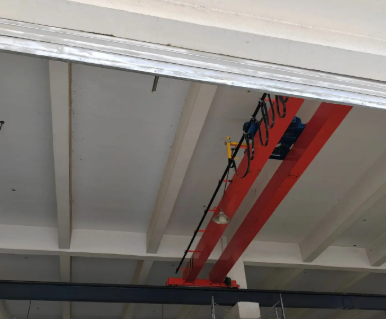
System Composition of Dual-hoist Collaborative Cranes
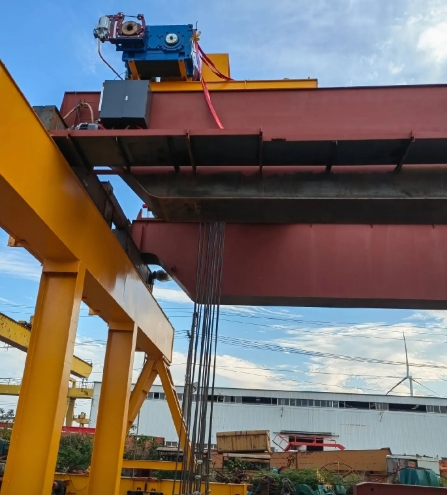
Dual-hoist collaborative cranes are essentially a type of overhead or gantry crane, which are common cranes in industrial settings, equipped with two independent lifting mechanisms. These cranes typically include two electric hoists, double-trolley tracks, a flexible spreader, and a central control system. Unlike traditional single-hoist cranes, dual-hoist collaborative cranes do not simply stack two lifting units; instead, they achieve consistent motion of the two crane mechanisms through deep electrical and mechanical coupling. During synchronous lifting, the two hoists must start simultaneously, run at the same speed, and brake together; any minor deviation can cause load tilting or additional stress. Therefore, the design core of dual-hoist collaborative cranes revolves precisely around the goal of synchronous lifting. The importance of synchronous lifting cannot be overstated for these cranes. Such cranes represent a significant advancement in crane engineering.
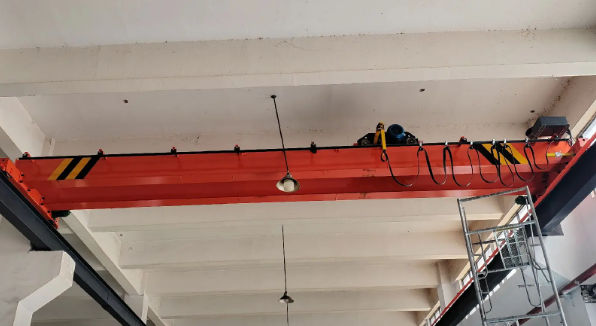
Mechanism for Achieving Synchronous Lifting
For dual-hoist collaborative cranes, the realization of synchronous lifting relies on support from a multi-level technical system. First is the matching at the drive level. Dual-hoist collaborative cranes typically use variable frequency motors of the same model and speed, powered by a common DC bus, ensuring consistent speed characteristics from the source. Achieving synchronous lifting requires precise control of these motors. Second is the coordination at the control level. Modern dual-hoist collaborative cranes are generally equipped with programmable logic controllers, using encoders to collect real-time lifting height and speed data from the two hoists. When the controller detects a position deviation exceeding the set threshold, it immediately adjusts the motor speed via the frequency converter, forming a closed-loop correction. This process is completed within milliseconds, ensuring the continuity of synchronous lifting. The reliability of cranes is paramount in heavy lifting, and synchronous lifting directly enhances this reliability.
In addition to electrical synchronization, some heavy-duty dual-hoist collaborative cranes also introduce mechanical flexible couplings as a redundancy safeguard. When the electrical system malfunctions, the mechanical structure can forcibly limit the relative displacement of the two hoists, preventing load runaway. This synchronous lifting scheme, which prioritizes electrical control supplemented by mechanical measures, balances precision and safety, making dual-hoist collaborative cranes particularly outstanding in ultra-large tonnage lifting tasks. Such cranes are now indispensable in heavy industry.
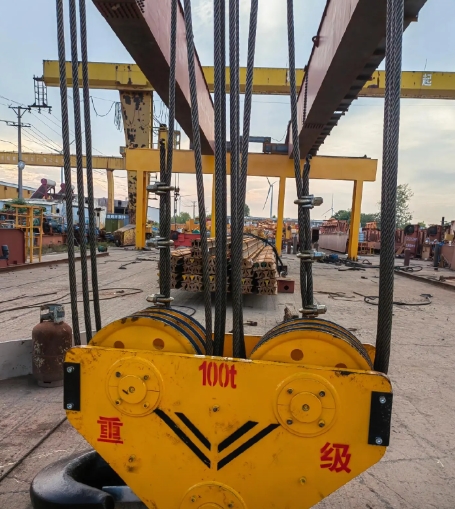
Role Transition of Cranes in Dual-hoist Collaboration
In the dual-hoist collaborative crane system, the traditional equipment—crane—is endowed with new connotations. A single crane no longer operates independently but serves as a node in a collaborative network. Dual-hoist collaborative cranes require each crane to have high dynamic response capability and low failure rates, as any single-point failure will directly affect the synchronous lifting performance. The demand for synchronous lifting drives continuous innovation in crane design. To this end, crane manufacturers continuously optimize reducer clearance, improve brake response speed, and develop dedicated anti-sway algorithms. It can be said that the popularization of dual-hoist collaborative cranes has driven the transformation of cranes from dddhhhextensivedddhhh tools to dddhhhprecisiondddhhh robots. Cranes are no longer just lifting tools; they are intelligent systems.
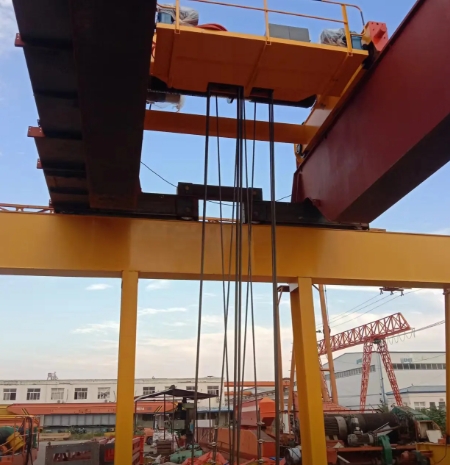
Engineering Advantages of Dual-hoist Collaborative Cranes
Dual-hoist collaborative cranes employing synchronous lifting demonstrate significant advantages in multiple dimensions. First, load capacity is doubled. By sharing the weight through two hoists, dual-hoist collaborative cranes can easily handle large workpieces weighing hundreds of tons, eliminating the need for custom giant single-hoist cranes. Second, operational flexibility is enhanced. Dual-hoist collaborative cranes can operate collaboratively or be separated into independent cranes to adapt to different working conditions. Third, safety is improved. Synchronous lifting reduces load sway, and combined with the unique multi-point suspension of dual-hoist collaborative cranes, it significantly lowers the risk of overturning. These advantages make dual-hoist collaborative cranes highly favored in fields such as wind power installation, shipbuilding, and nuclear power construction. The versatility of cranes makes them indispensable in these sectors. Synchronous lifting is central to these engineering advantages.
Challenges and Future Evolution
Although dual-hoist collaborative cranes have achieved a high level of synchronous lifting, they still face challenges such as wireless communication delays and deformation of long-distance spreaders. As cranes become more intelligent, these challenges are being systematically addressed. In the future, dual-hoist collaborative cranes will be more deeply integrated with digital twin and 5G technologies. By mapping crane status and load posture in real time, the control accuracy of synchronous lifting is expected to improve from millimeter level to sub-millimeter level. Additionally, artificial intelligence algorithms will be used to predict mechanical wear in dual-hoist collaborative cranes and optimize synchronous lifting parameters in advance. The evolution of synchronous lifting will continue to push boundaries. It is foreseeable that with the advancement of the intelligence wave, the combination of dual-hoist collaborative cranes and synchronous lifting technology will become increasingly close, and cranes, as the execution terminals, will evolve from performers of dddhhhheavy liftingdddhhh to carriers of dddhhhsmart hoisting.dddhhh Future cranes will be even more autonomous and efficient.
Conclusion
Through precise electrical control and reliable mechanical design, dual-hoist collaborative cranes have successfully achieved high-precision synchronous lifting. In this system, cranes are no longer isolated equipment but key units in a collaborative network. From drive matching to closed-loop correction, from redundancy protection to intelligent evolution, the synchronous lifting technology of dual-hoist collaborative cranes is continuously breaking boundaries. Synchronous lifting remains the cornerstone of dual-hoist collaborative crane technology. In the future, with the infusion of new materials and artificial intelligence, dual-hoist collaborative cranes will become more efficient and intelligent, and synchronous lifting, as its core technology, will continue to lead the technological innovation of the crane industry. In summary, cranes are evolving rapidly, and synchronous lifting is at the heart of this transformation.
